Kitchen Prep Tools for Faster Cooking
Prep is the part of cooking nobody photographs, and it is the part that decides whether dinner happens at six or at eight. A sharp knife helps, but the right prep tools help more: they make the repetitive jobs fast, even, and boring, so the cooking itself stays fun.
This guide compares the prep tools that matter, settles the garlic press versus mincer question, and ends with a fifteen-minute prep routine you can use tonight. No tool here costs much, and every tool here gets used three times a week or it does not stay.
Garlic press versus mincer: which one is worth it?
The press and the mincer do the same job with different trade-offs. The press minces garlic through small holes with one squeeze, and the result is fine and even, perfect for sauces, dressings, and marinades where a chunk of raw garlic would stand out. It needs a rinse right after use, or the garlic dries in the holes.
The mincer, usually a small rocking blade or a mini chopper, gives you control over the size: fine for sauce, coarse for a stir-fry. It takes ten seconds longer and one more thing to wash. If you cook garlic every day, buy the press. If you cook it twice a week, the mini chopper does the job and dices onions too.
The peeler trick nobody uses
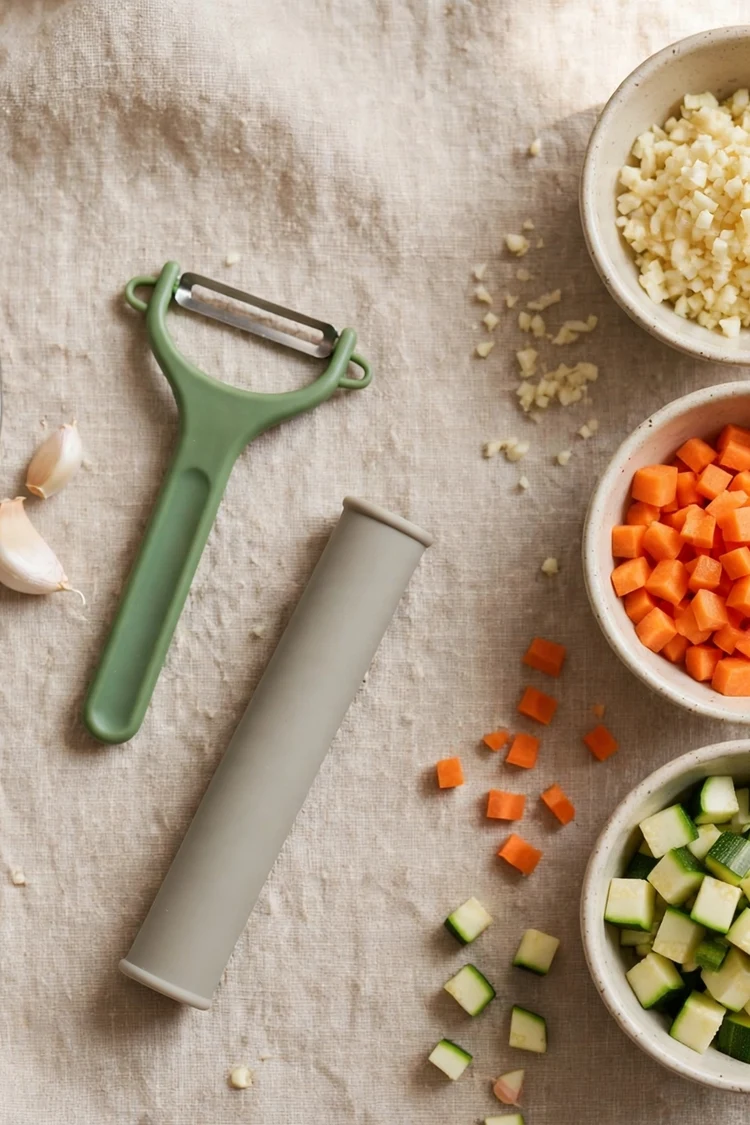
The silicone garlic peeler is the cheapest tool on this list and the one guests ask about most. Put a clove inside the tube, roll it on the counter with your palm, and the skin comes away in one piece. Your hands never touch the garlic, so they never smell like it.
It works because the skin is papery and the clove is firm, so the roll separates them without crushing anything. One tube handles a whole head, clove by clove, in under a minute. Keep it in the drawer with the press, and the garlic station is done: peel, press, cook.
The chopper and the peeler
The vegetable chopper is for onions, peppers, and celery: press, and the pieces fall into the container below, even and ready. The julienne peeler is for carrots, zucchini, and cucumbers: long strokes turn them into thin ribbons for salads and stir-fries. Together they cover every vegetable a weeknight dinner needs.
Both tools share one rule: wash them right after use. A chopper grid with dried onion on it is a chopper you will not reach for tomorrow, and a peeler with a clogged blade is a knife you already own. Rinse, dry, put back. Ten seconds now saves ten minutes later.
Tongs and lids: the quiet helpers
Two small tools finish the prep shelf. Heat-proof tongs turn food in the pan without scratching it, and they double as a serving tool, so the drawer holds one pair instead of three. Anti-overflow lids sit on the pot while pasta water boils, and the stove stays clean because the foam never leaves the pot.
Neither tool looks impressive, and both get used every single night. That is the test for a prep tool: not how clever it looks on a shelf, but how often your hand reaches for it without thinking. If you reach for it daily, it stays. If you have to remember it exists, it goes.
A 15-minute prep routine
Here is the routine: start the water first, then peel the garlic with the tube and press it into a small bowl. Chop the onion and peppers in the chopper while the water heats. Slice the carrots with the julienne peeler last, because they cook fastest. Everything lands in small bowls, in cooking order, before the pan is hot.
Fifteen minutes, one board, one knife, three tools, and no tears. The routine works because the tools do the slow jobs and the knife does the one job only a knife can do. Try it for a week, and the hour you save will show up somewhere better than the kitchen.
Save this guide on Pinterest: Kitchen Prep Tools Ideas board has more ideas like this one. Follow @garlicskitchen to see them first.