
Fridge Organization Ideas: Clear Bins That Make Everything Visible
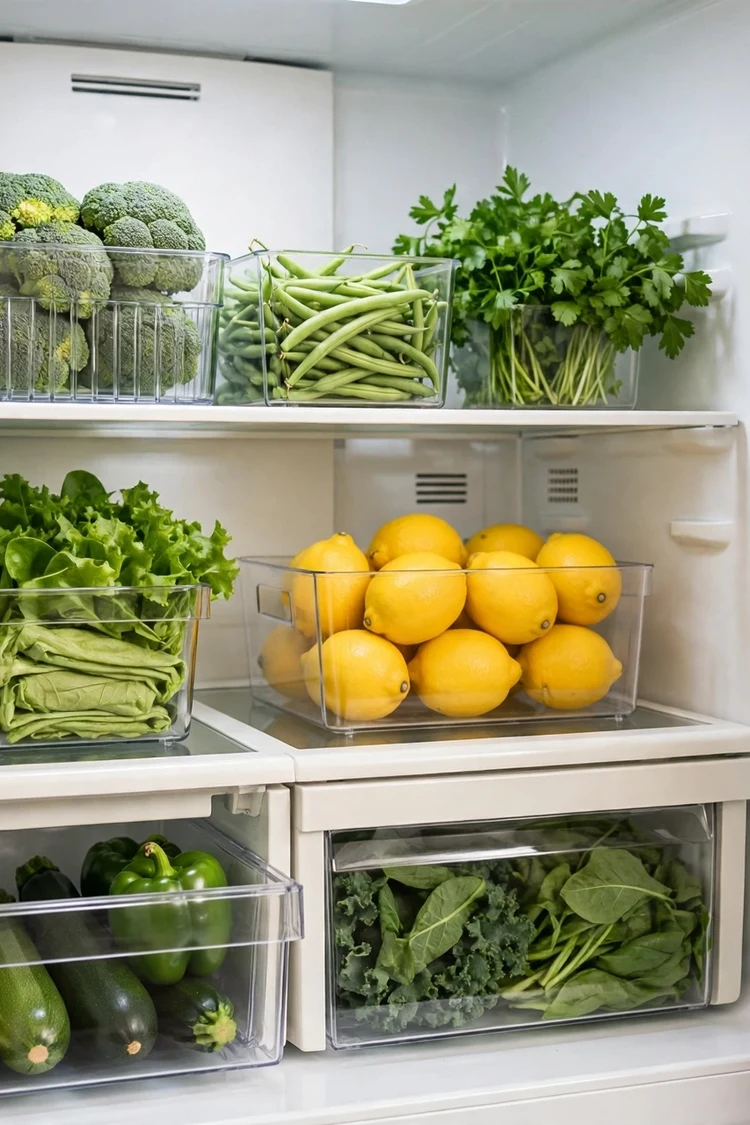
A fridge is not a storage room. It is a small shop you visit three times a day, and when you cannot see what is inside, you buy it twice and throw it away once. The fix is not a bigger fridge. It is clear bins, zones by use, and one weekly reset.
This guide shows how to organize a fridge with clear bins, keep produce fresh longer, and stop losing food at the back. Nothing here needs a renovation, and the whole system costs less than one week of wasted groceries.
The visibility rule
The first rule of a tidy fridge is simple: if you cannot see it, you will not eat it. Clear bins make everything visible without pulling anything out, and the handles let a whole zone slide out like a drawer. Group by use, not by type: breakfast together, snacks together, sauces together.
The bin you open most goes at eye level, and the one you open once a week goes low. Leftovers go in one bin, at the front, so they get eaten before they turn into a science project. The back of a shelf is not storage. It is where food goes to be forgotten.
Bins by zone
Four bins cover most fridges: condiments, yogurts and dairy, snacks, and leftovers. A fifth bin holds the small things that roll around: butter, jam, the half lemon. Each bin gets one job, and the job never changes, so everyone in the house knows where things live without asking.
Measure the shelf before you buy, and leave a finger of space on each side so the bin slides out. A bin that does not slide is a box, and a box is just a prettier version of the mess you already have. Clear plastic, not coloured, so you can see the contents from the door.
Keep produce fresh longer
Vegetables die in the fridge for two reasons: too much water and too little air. A keeper box with a vent and a raised base fixes both: the vent lets the right amount of air in, and the base keeps the leaves out of the water that collects at the bottom. Lettuce stays crisp, herbs stay green, and the box stacks neatly.
Wash and dry the vegetables before they go in, and the box does the rest. Keep the vent half open for most greens, and check the box once a week for the one leaf that went soft first. One soft leaf, left in the box, turns the rest soft in a day.
The weekly reset
Ten minutes, once a week, keeps the system alive. Pull one shelf out at a time, wipe it, and check the dates. Move the oldest food to the front and the newest to the back. Throw away the one thing that is past saving, and write the one thing you are out of on the shopping list.
The reset works because it is small. A fridge that gets ten minutes a week never needs an hour of deep cleaning, and a fridge that never needs an hour never gets put off until the smell tells you to do it. Sunday evening, after dinner, before the week starts.
What not to buy
Skip the gadgets that promise a smarter fridge: the egg minder, the bottle stacker, the drawer that sorts itself. Skip coloured bins you cannot see through, and skip anything that needs to be glued to a shelf. A fridge is cold and wet, and glue gives up in a month.
Buy bins, keeper boxes, and one roll of labels. That is the whole system, and it costs less than the food most households throw away in a month. The fridge does not need more stuff. It needs less stuff, in clear bins, where you can see it.
Save this guide on Pinterest: Fridge Organization Ideas board has more ideas like this one. Follow @garlicskitchen to see them first.