
Under Sink Organization: The 2-Tier Pull-Out That Hides the Mess
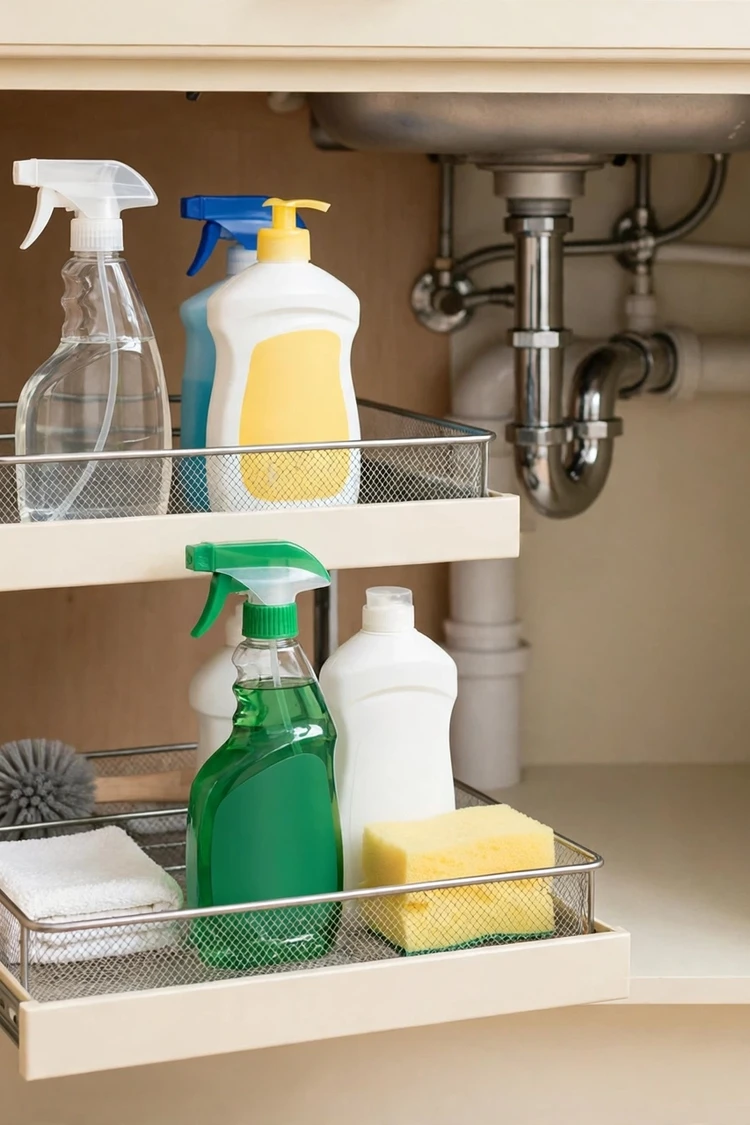
The cabinet under the sink is the most wasted space in most kitchens. Pipes take the middle, bottles fall over in the dark, and the sponge lives in a puddle. A two-tier pull-out organizer fixes all of it, because it brings the whole shelf out to you instead of asking you to reach into the dark.
This guide shows how to measure first, choose a pull-out that fits around the pipes, and organize it so the daily cleaners live up top and the backups live below. No plumber, no drilling, just a shelf that slides.
Measure first
Measure before you buy anything for this cabinet, because the pipes decide what fits. Measure the height under the lowest pipe, the width between the cabinet walls, and the depth from the door to the back wall. Write the three numbers on a card and take it to the shop, or the organizer will not fit and the return will cost a week.
Most cabinets fit a two-tier pull-out that is narrower than the door, with the pipes running through the gap in the middle. If the pipes sit low, choose a shorter organizer. If they sit high, the top tier can hold taller bottles. The pipes are the plan; the organizer follows them.
The pull-out tiers
The top tier holds the daily cleaners: dish soap, the spray bottle, the sponge, and the scrub brush. The bottom tier takes the backups: the extra sponges, the trash bags, the drain cleaner you use once a season. The shelves slide on smooth runners, so you pull the whole tier out instead of reaching into the dark.
Do not overload one tier. A pull-out that sags is a pull-out that stops sliding, and a pull-out that stops sliding is a shelf you cannot reach. Keep the heavy bottles low and the light ones high, and the runners will last for years.
A cleaning caddy
A small caddy on the top tier holds the things you carry around the house: the all-purpose spray, a cloth, and the glass cleaner. Lift the caddy out, clean the bathroom, and put it back. The caddy keeps the bottles upright and the cabinet dry, because nothing leaks when it stands up.
One caddy per household is enough. Two caddies mean two sets of the same bottles, and the second set is the one that leaks. Keep the caddy small enough to carry with one hand, and the cleaning gets done because the tools are already together.
What goes elsewhere
Not everything belongs under the sink. Keep the trash bags in the bottom tier, but keep the recycling bags somewhere else, or the cabinet fills up with bags instead of cleaners. Keep the dishwasher tablets in the pantry, not under the sink, because the steam and the damp ruin them.
The rule is simple: under the sink holds what you use at the sink, and nothing else. The moment a box of light bulbs or a bag of rags moves in, the cabinet stops being a cleaning station and becomes a junk drawer with pipes.
Keep it dry
The enemy under the sink is water. A small leak, left for a month, warps the cabinet floor and grows mould behind the bottles. Check the pipes once a season: run your hand along each joint and look for a drip. Put a small tray or a folded towel under the trap, so a slow drip shows up before it soaks the wood.
Wipe the shelves after every spill and keep the runners clear of grit. A dry cabinet with a pull-out organizer is a cabinet that works for years. A wet one is a renovation, and nobody wants a renovation under the sink.
Save this guide on Pinterest: Under Sink Organization Ideas board has more ideas like this one. Follow @garlicskitchen to see them first.